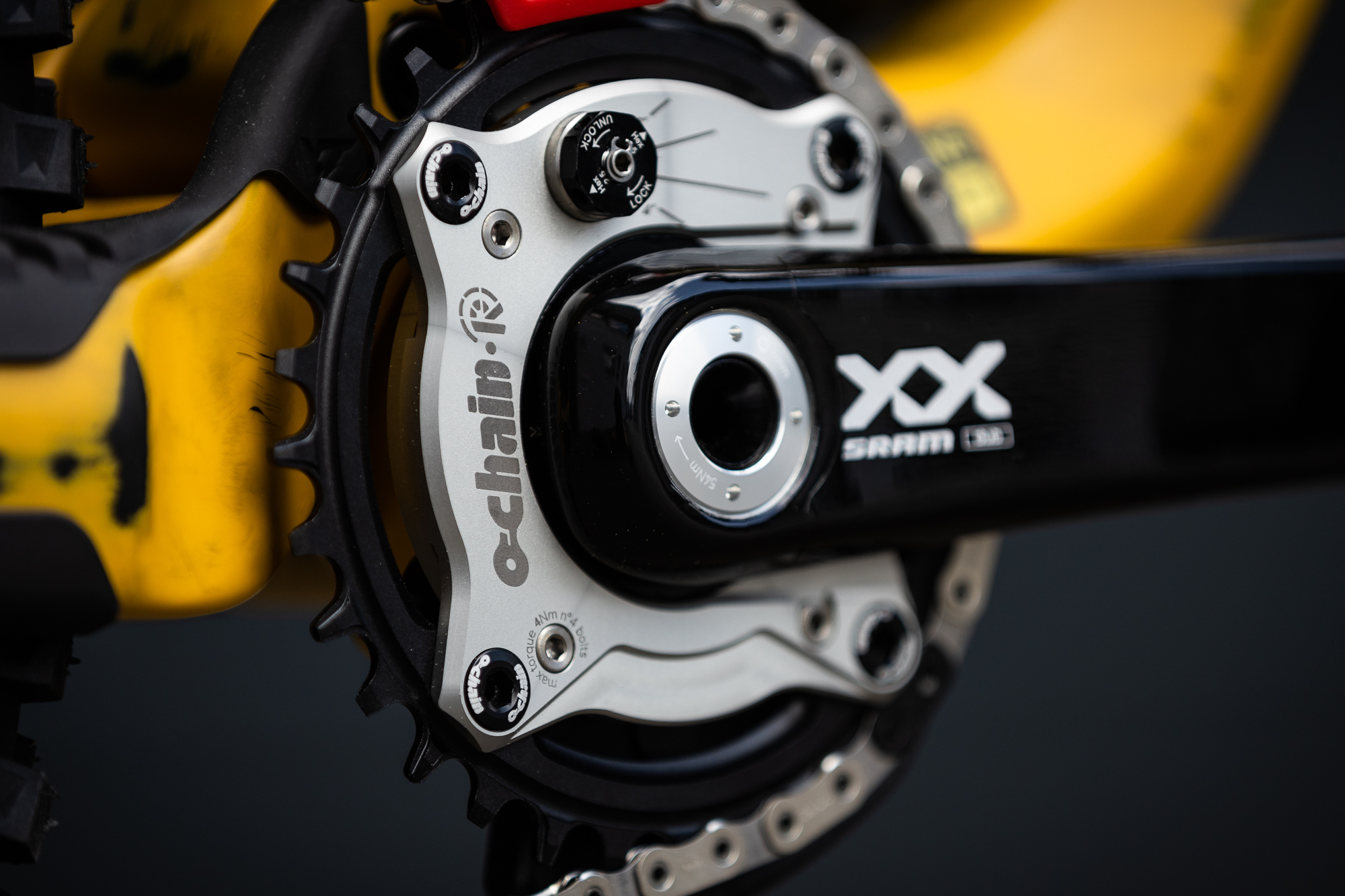
In simple terms, Ochain is a floating chainring spider (a component that sits between your crank and your chainring) designed for mountain bikes. The idea is to allow a controlled amount of backward rotation (or “float”) of the chainring relative to the crank arms — thereby decoupling the drivetrain from the suspension movement.
Here’s what that means and how it works:
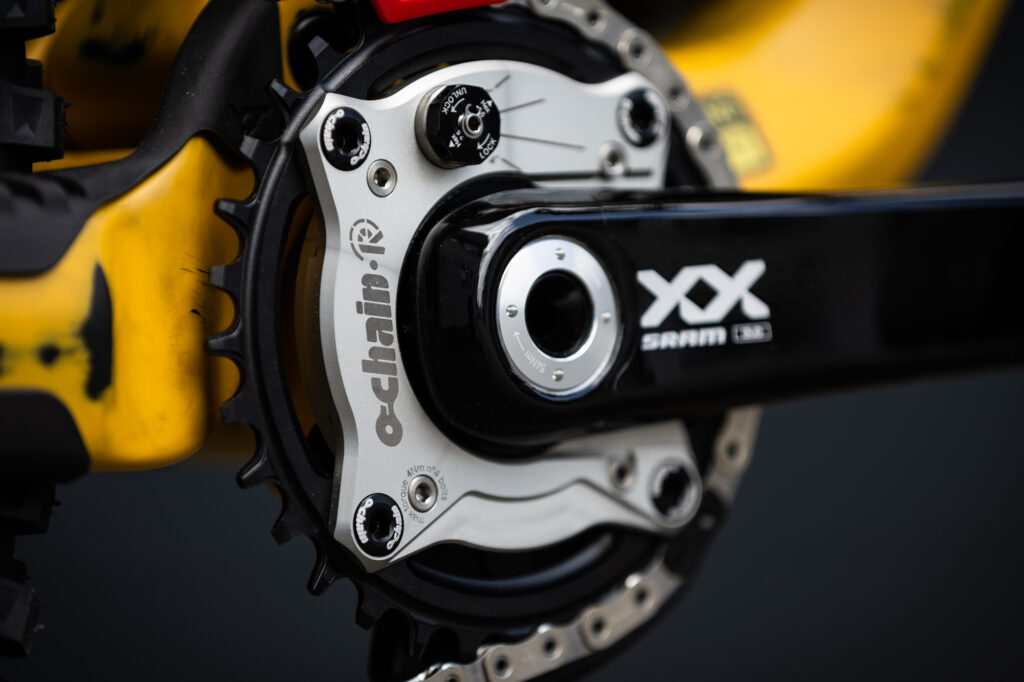
How it Works
- The standard setup on most 1x mountain bikes fixes the crankarms and the chainring rigidly together. As your rear suspension moves, the axle moves relative to the bottom bracket. That causes the chain to grow/slack, which pulls rearwards on the chainring and thus the cranks.
- Ochain introduces a mechanism (often via elastomers and floating plates) so that the chainring can move backward a specified number of degrees (for example 0°, 4°, 6°, 9°, 12°) relative to the crankarms.
- The product range includes multiple “models”: e.g., Ochain R, N, E, S — each targeting different use cases (enduro/downhill bikes, e-bikes, etc).
- As of July 2025, Ochain has joined the SRAM family of brands.
Technical Specs (Example: “N” and “R” models)
- Compatible with chainrings having a BCD of 104 mm (in many cases).
- Material: typically high-quality aluminium alloy (for example 7075 T6).
- Float (degrees of backward rotation) selectable or adjustable: e.g., the R model offers settings of 0°, 4°, 6°, 9°, 12° via an external dial (“EASY system”).
- Note compatibility issues: for instance, Ochain is not compatible with some older cranksets like the Shimano Saint & Zee according to some seller notes.
Why Use Ochain? What Are the Benefits?
Here are the key benefits of using an Ochain floating spider in your mountain-bike drivetrain setup:
1. Reduced Pedal Kickback
“Pedal kickback” is the phenomenon where the crankarms rotate backwards slightly when the suspension compresses and causes the chain to pull on the transmission. This backward movement can be annoying—it can tug your feet on the pedals in downhill or rough terrain. A test review explains:
“The Ochain allows the chainring to rotate backwards slightly … This reduces or removes pedal kickback, and allows the suspension to move freely, as if the bike was chainless.” wideopenmountainbike.com
By providing that float, the link between the suspension movement and crank/chainring movement is softened. In practice you’ll feel less tugging, less disturbance in the pedals under heavy suspension movement.
2. Improved Suspension Performance & Rear-Wheel Grip
With less chain/drive-train interference resisting the suspension travel, your rear wheel can move more freely and maintain better contact with the terrain. This often translates into smoother behaviour, especially on rough, technical descents. A review from 2020 similarly noted:
“… the new … Ochain … allows a tunable (between 6-12°) rearward rotation … This rotation … decouples the pedals from the undesirable rearward rotation caused by ‘pedal kickback’.” ENDURO Mountainbike Magazine
In other words: better suspension sensitivity, less drivetrain interference, improved ride control.
3. Quieter Drivetrain & Smoother Ride Feel
Because the chain tension fluctuations (from suspension movement) are reduced, you might get less chain slap, fewer drivetrain noises, and an overall smoother ride. For example:
“Chain slap was cut in half … quietest descending system I’ve ever used.” The Lost Co.
If you value a calm, composed feel when descending hard, this is a clear plus.
4. Customisability & Adaptability
With models like the R and N, you can tune the amount of float to suit your style or terrain. For example, if you ride mostly aggressive downhill terrain you might favour more float (e.g., 12°) to maximise suspension freedom; while for more pedalling or general trail use you might reduce float to minimise “dead zone”. The Ochain N comes with a default float (9°) and optional kits to switch to 4°, 6°, 12°. Biketart
5. Proven at the Top Level
Ochain is used by elite downhill and enduro teams. For instance:
“Trusted and chosen by more than 15 elite teams competing in the World Cup Downhill and Enduro events.” gravitybikeperformance.com
That adds some credibility: this is not just a gimmick but has real world high-end usage.
Things to Consider / Potential Downsides
As with any upgrade, it’s important to balance the benefits with considerations:
- Pedalling Efficiency / Feel – Because you introduce a bit of “float” or play (albeit controlled) into the drivetrain, some riders report changes in pedalling feel — especially under hard pedalling or climbing. One reddit user said: “It’s def different, but you get used to it quick. For me, 100 % worth the tradeoff.” Reddit
So if you ride a lot of climbs, XC or long pedallers, this may matter. - Compatibility & Installation – You must check compatibility with your crankset, chainring, chainline, etc. Ochain notes that they cannot guarantee compatibility with all chainguides, all cranksets (e.g., older Shimano Saint/Zee) and all e-bike setups. Biketart+1
Installation may require removing the crank, fitting the spider, adjusting spacing/offset, etc. - Cost & Weight – This is a premium upgrade: higher cost than a standard fixed spider. Also while they are fairly light (e.g., ~140-160 g for some models) you are adding components (spider + chainring bolts + possibly special nuts) so the net weight may slightly increase relative to a simpler setup.
- Maintenance – Some models require periodic servicing (replacing elastomers, seals). Example: one review mentions a “150 hour service interval”. The Lost Co. Also when you tune float (if not easy external adjustment) you may need to disassemble.
- Chainline / Offset Effects – Some riders on forums pointed to issues where the Ochain changed the chainring offset (virtual +3mm) so chainline may shift and you might need to check spacing.
- Not a Magic Bullet – Some users say the benefit is more subtle and depends on
If you seldom hit big suspension travel or pedal hard, the gains may be less noticeable.
Who Will Benefit Most?
Let’s summarise who stands to gain the most (and who might not) from fitting an Ochain floating spider:
Good candidates:
- Downhill or enduro riders, especially those hitting big terrain, high speeds, rough descents and want the smoothest ride possible.
- Riders who value suspension performance and rear-wheel grip over pure pedalling performance.
- Those with bikes that have significant suspension travel / axle path where the chain growth/ kickback effect is more pronounced.
Perhaps less ideal:
- XC racers, long‐distance pedal-centric riders where drivetrain efficiency and climbing performance dominate.
- Riders who have minimal suspension movement or minimal chain growth/kickback (less likely to notice a difference).
- Those working on a tight budget or who prefer simpler components.
How to Decide & Install Tips
Here are a few action steps if you’re thinking about going for Ochain:
- Check compatibility
- Confirm your crankset can accept a removable spider (some integrated setups may not).
- Check BCD (many Ochain models assume 104 mm BCD chainrings).
- Check chainline / offset changes (Ochain often adds +3 mm virtual offset) and ensure your chain, cassette, derailleur setup will tolerate that.
- Confirm your chainguide (if you use one) and chainring fit will still work under slight float.
- Decide the float degree
- Many start with a moderate float (e.g., 6-9°) to balance ride smoothness and pedalling engagement. You can tune upward or downward based on feel.
- For bikes used mostly for descending or with less climbing, the higher float (9-12°) may be more appealing.
- Installation & setup
- Remove crankarms according to your manufacturer’s specs.
- Fit Ochain spider, ensuring correct torque, alignment, and chainring mounting.
- After installation, ride carefully and assess chainline, shifting, chain tension, any rubbing/clunking.
- Be aware of needed service intervals (check elastomers/seals) as recommended by Ochain.
- Ride feel & adjustments
- After initial rides, pay attention to pedal feel, how the rear suspension behaves, chain noise, any chain-slap.
- If you feel too much “dead zone” before the chain engages after pedalling begins (i.e., you spin the crank a bit before drive kicks in), you might reduce float.
- Conversely, if you still feel pedal kickback or drivetrain interference on big hits, you might increase float.
Conclusion
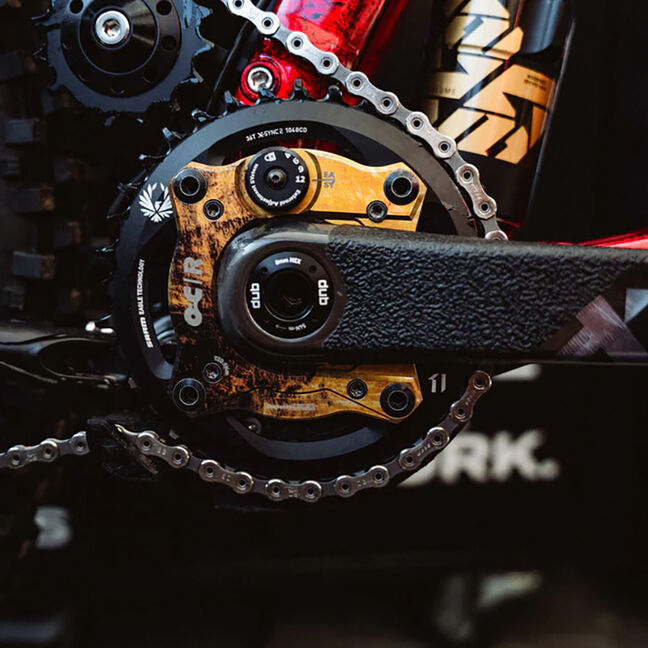
If you’re looking to elevate your mountain biking setup especially for aggressive riding, the Ochain floating chainring spider is a compelling upgrade. With its ability to decouple the drivetrain from suspension movement, reduce pedal kickback, enhance suspension performance and deliver a smoother ride, it offers quite a few benefits — especially for downhill and enduro applications.
That said, you’ll want to weigh the cost, compatibility, and your riding style before upgrading. If you climb a lot, or ride less extreme terrain, the benefit may be less obvious. But for those seeking the ultimate ride feel, it might just be worth it.
If you like, I can pull together a comparison of the various Ochain models (R, N, E, S) including weights, float degrees, and best use-cases to help you pick which to buy. Would you like that?