Here’s a broad comparison of the key specs and characteristics:
| Fork | Travel / Sizes | Chassis / Stanchion | Damper / Spring | Weight / Key Features |
|---|---|---|---|---|
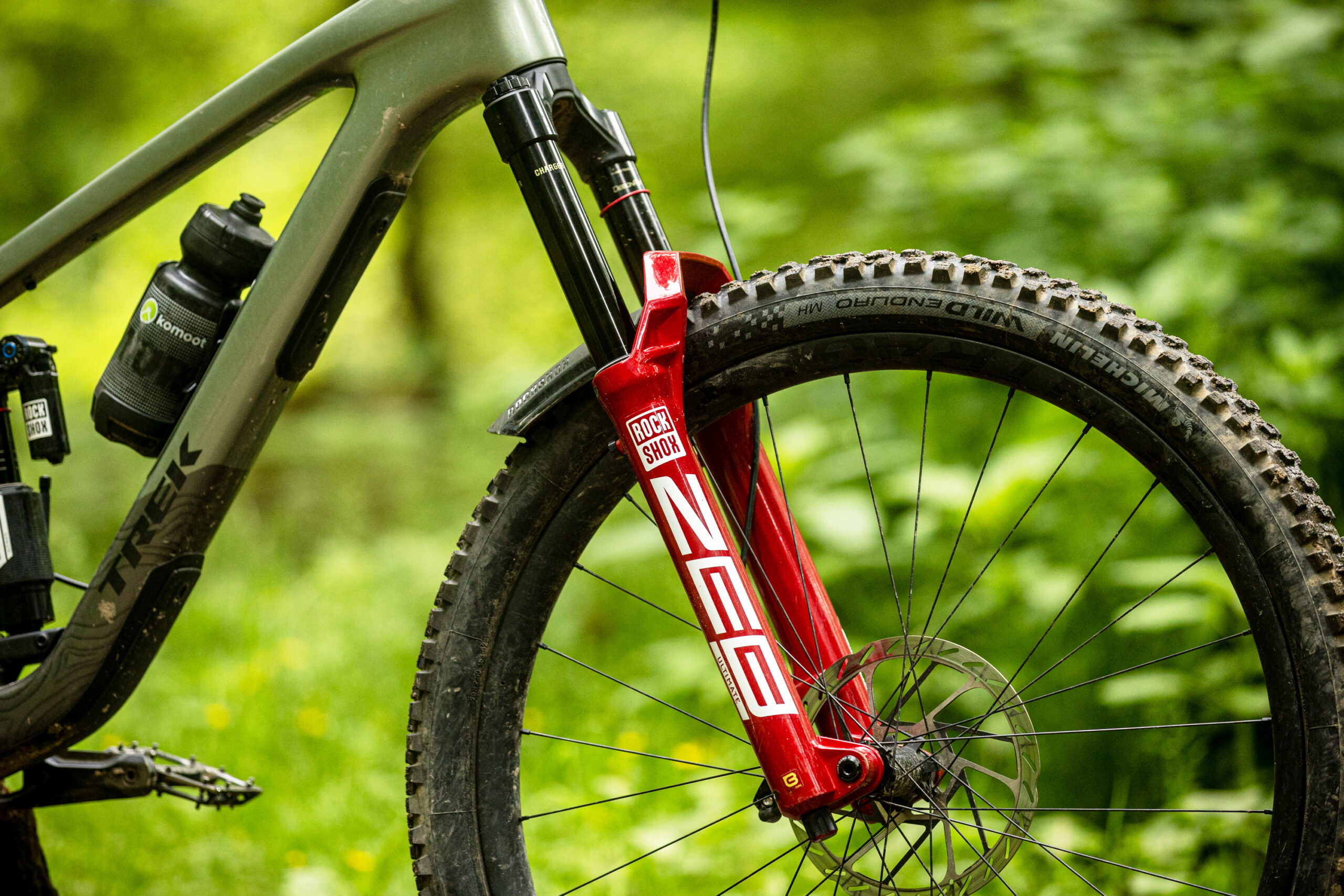
| Zeb Ultimate | 150–190 mm SRAM+2ENDURO Mountainbike Magazine+2 | 38 mm aluminium SRAM+1 | Charger 3.1 RC2 damper + DebonAir+ spring with ButterCups SRAM | ~2,341 g for 29″, 170 mm version Evo Cycles+1 • ButterCups elastomers reduce high-frequency vibration. ENDURO Mountainbike Magazine |
| Fox Podium (Factory) | 160 / 170 mm (Bikerumor) Bikerumor | Inverted fork, 47 mm upper “legs” but 36 mm stanchion (inverted) Bikerumor | GRIP X2 damper + Float EVOL GlideCore air spring RideFOX+1 | Starting weight ~2,695 g (per Bikerumor) Bikerumor • 20 mm thru-axle, 200 mm rotor compatible, large crown, very stiff design. RideFOX |
| Fox 38 Factory | 160–180 mm (some sources say) Bike Perfect | 38 mm stanchions, very stiff chassis ENDURO Mountainbike Magazine | GRIP2 damper (4-way: HSC, LSC, HSR, LSR) + EVOL air spring MTBIKER+1 | Weight: ~2,440 g for some 29″, 170 mm versions MTBIKER • High adjustability; internal channels, bleed ports to relieve pressure in lowers. ENDURO Mountainbike Magazine+1 |
| Öhlins RXF 38 M.2 | 160 / 170 / 180 mm (air spring is adjustable) Sussed Out Suspension | 38 mm stanchions, very precise CNC / premium build BikeRadar | TTX18 damper + 3-chamber air spring (main + ramp-up) Sussed Out Suspension | ~2,305 g for 170 mm version, per MBR test MBR • Floating axle, e-MTB approved version available. Sussed Out Suspension |
2. Ride Feel & Performance
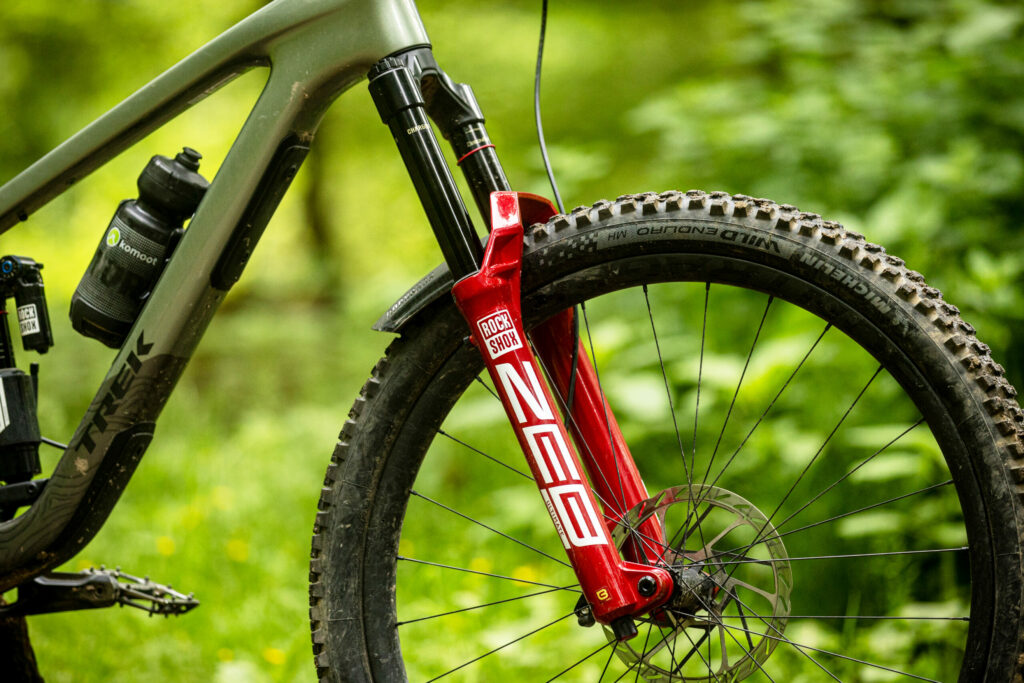
RockShox Zeb Ultimate
- Designed for hard-hitting trails, steep terrain, and e-MTB / enduro duties.
- Very stiff 38 mm chassis gives a lot of confidence under heavy braking or big impacts. ENDURO Mountainbike Magazine
- ButterCups (elastomer inserts) damp small vibration, making the fork feel more composed and less chattery. ENDURO Mountainbike Magazine
- Charger 3.1 RC2 damper provides good tuning for both high- and low-speed compression, plus rebound — helps reduce hand fatigue. SRAM
- DebonAir+ spring yields a plush top-end feel but still ramps up well. Evo Cycles
- Also includes pressure relief / “bleed” valves to equalize air in the lowers — useful when doing altitude changes or after heating. Evo Cycles+1
- Reviewers note that at its price point, it offers “excellent value for demanding riders.” ENDURO Mountainbike Magazine
Trade-offs / Considerations
- Though reasonably light for a 38 mm fork, it’s still not featherweight.
- Requires careful setup (tokens, air pressure) to avoid harsh bottom-outs or under-use of travel.
- Maintenance: needs periodic service, especially if using for aggressive / enduro riding.
Fox Podium (Factory)
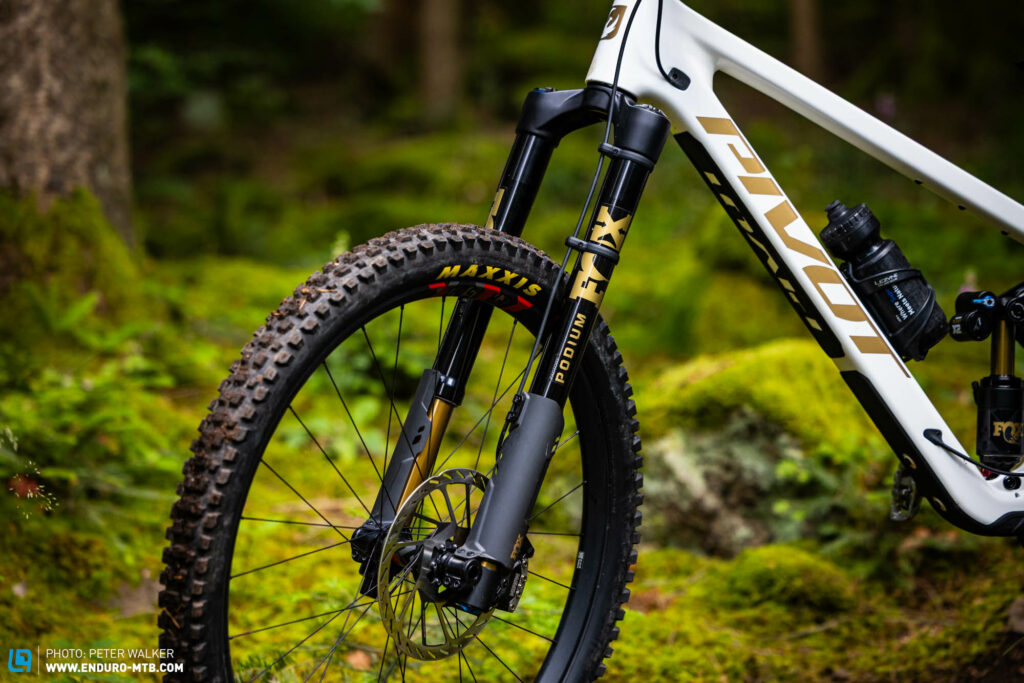
- Very unique: it’s an inverted fork — the “legs” are at the top, damper / air spring at the bottom. This gives very high stiffness, especially in fore-aft and torsion, thanks to the big crown. MBR+1
- Built very “like a downhill fork” but with enduro travel (160 / 170 mm). Bikerumor
- GRIP X2 damper: very adjustable (4-way), focused on descending performance. Provides excellent control at high speeds. RideFOX
- GlideCore spring: reduces friction by allowing internal compliance — helps sensitivity. RideFOX
- Very stiff design means excellent tracking through big hits; great for aggressive enduro or E-MTB.
- Bleeders included (for lower leg pressure equalization). Bikerumor
Trade-offs
- Very heavy (per Bikerumor) — nearly 2.7 kg. Bikerumor
- Very expensive — at the high end.
- Unusual maintenance: inverted design may complicate service or parts.
- More tuned for descent; less ideal if you’re doing a lot of pedaling / cross-country style climbs.
Fox 38 Factory
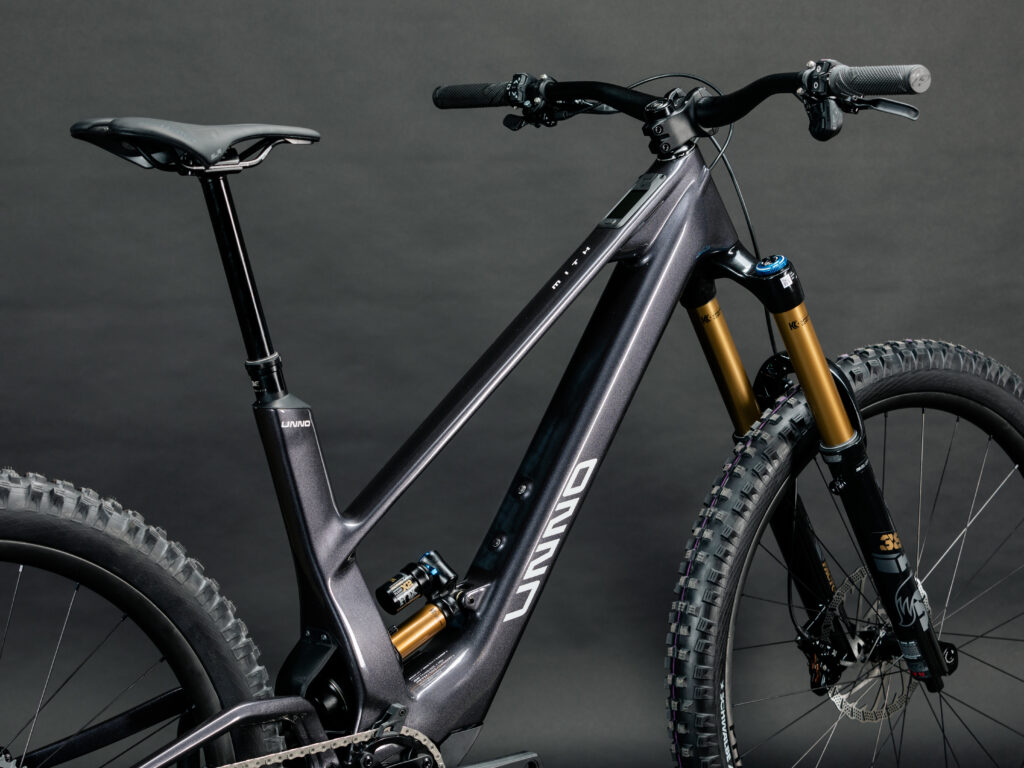
- Traditional long-travel single-crown design, but with a very burly 38 mm chassis for stiffness. ENDURO Mountainbike Magazine
- Uses GRIP2 damper: 4-way adjust (HSC, LSC, HSR, LSR) gives a huge tuning range to dial in support, sensitivity, braking, and bottom-out. MTBIKER
- EVOL air spring: pretty standard for Fox air forks, but effective — and you can use volume spacers to tune ramp / progression.
- New lower leg design includes air-oil channels to help with internal lubrication and reduce pressure buildup. Top Bike Discount Shop
- Floating axle helps align legs and reduce friction / flex. ENDURO Mountainbike Magazine
- Reviewers praise its composure in big terrain, and that it’s very capable under big hits. BikeRadar
Trade-offs
- Heavier than lighter trail forks.
- Very wide tuning potential — but that means more work to dial in for your exact style / weight.
- High price, especially for Factory / Kashima models.
- May feel too stiff / firm for riders who prioritize small-bump sensitivity over big-hit support.
Öhlins RXF 38 M.2
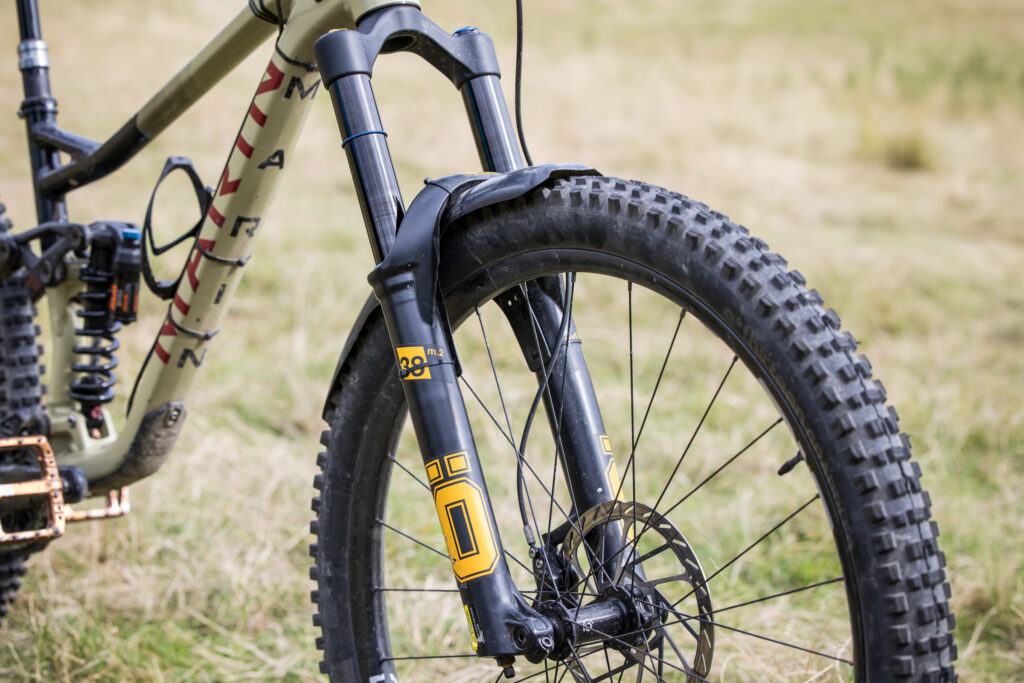
- Premium build, uses TTX18 damper (shared with Öhlins dual-crown DH fork) — very high-performance damping. BikeRadar
- 3-chamber air spring: main + ramp-up chamber, letting you tune the beginning stroke and bottom-out / mid-to-end stroke separately. Sussed Out Suspension
- Very smooth through rough terrain; MBR’s review praised its ability to keep hands comfortable over constant rough hits. MBR
- Ramp-up chamber gives excellent bottom-out resistance and makes using full travel very controllable. BikeRadar
- Has floating axle to reduce friction, 38 mm stanchions for stiffness, and is available in e-MTB–friendly versions. Sussed Out Suspension
- Weight is very competitive for such a high-performance fork (~2,305 g for 170 mm per MBR). MBR
Trade-offs
- Setup is more complex: tuning 3-chamber air spring requires more attention, and many users report having to tune pressure carefully.
- More expensive / harder to service (premium / specialized damping internals).
- Some feel the top of stroke (fully extended) can feel a little “sharp” and less compliant. MBR
- The factory-installed negative spring (volume reducer) is controversial: some recommend removing it for better performance. BikeRadar
3. Tuning & Maintenance
- Zeb Ultimate: Service interval is typical for high-end air forks. Use the RockShox / SRAM service docs. The ButterCups may require inspect / replacement over time for best performance.
- Fox Podium: Inverted design means different maintenance than typical forks — you’ll need to be comfortable servicing / bleeding from the inverted layout, or trust a shop.
- Fox 38 Factory: With GRIP2’s 4-way adjust, you’ll want to spend time dialing in both compression circuits + rebound: HSC / LSC and HSR / LSR. Also watch for pressure in the lowers (bleeding valves).
- Öhlins RXF 38 M.2: Because of the 3-chamber design, setup and tuning take more effort. Users strongly recommend learning how to properly balance main and ramp-up chamber pressure. For bottom-out tuning, the ramp chamber is key.
4. Best Use-Cases & Recommendations
Here are some suggestions on when each fork might be the “best” pick, depending on your riding style and priorities:
- Choose the Zeb Ultimate if you want a versatile, high-performance, stiff fork for fast enduro trails or e-MTB use. It’s great for riders who want strong damping, low vibration, and good all-around descending performance, without going totally “downhill”.
- Choose the Fox Podium if you want maximum stiffness and durability in a single-crown, and your priority is pure descending performance. Ideal for aggressive enduro racers or riders who don’t care as much about the uphill weight penalty.
- Choose the Fox 38 Factory if you want super high tunability + a proven platform, and you ride a mixed bag of tech terrain, big hits, and maybe cross-country-ish climbs. The GRIP2 adjustability is a big plus.
- Choose the Öhlins RXF 38 M.2 if you want premium feel and the most refined bottom-out control, especially for very rough / high-speed enduro. It’s also a top pick for riders who love to tune precisely and don’t mind the extra setup complexity.
Conclusion
All four of these forks are very capable, high-end choices for enduro / aggressive mountain biking. The “best” for you depends heavily on what you prioritize:
- Stiffness and value → Zeb.
- Descending performance + stiffness → Podium.
- Tuneability and control → Fox 38.
- Refined control, premium damping → Öhlins RXF 38 M.2.
If I were to recommend just one for a general all-mountain / enduro rider who doesn’t race but wants serious performance, I’d lean toward the Zeb Ultimate for its value-performance balance. But for racers or riders who want to fine-tune every click and chamber, Öhlins or Fox 38 could be more rewarding.